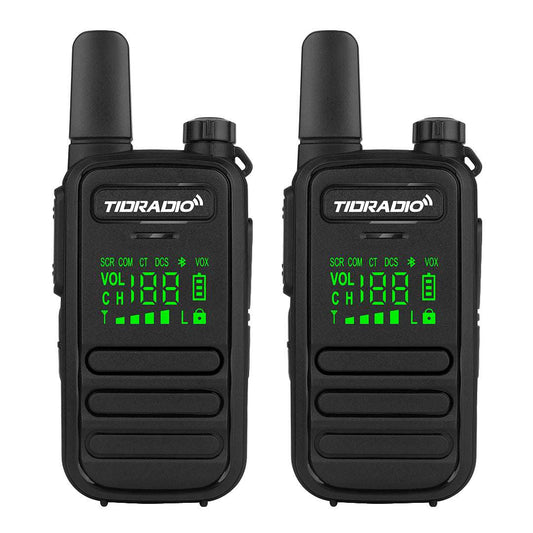
Emergency Communication in 2026: Why Reliable Radios Matter
When an emergency happens, communication can make a critical difference. Whether teams are responding to severe weather, coordinating a large event, managing a construction site, or handling daily operations, they need a reliable way to share information quickly.
In September 2026, the European Commission proposed a new EU Critical Communication System (EUCCS) to improve communication between emergency responders across European countries. The proposal aims to help emergency services share information across organizational and national borders, including data, video, messages, and location details. It also outlines a gradual transition toward broadband technologies such as 5G, with satellite connectivity intended to provide additional support.
This development highlights a broader trend: reliable communication is not just about transmitting a message. It is about helping people coordinate, make decisions, and respond effectively.
Although public-safety networks such as the proposed EUCCS serve specialized requirements, the same principle applies to businesses, outdoor enthusiasts, event organizers, and other teams. Choosing the right communication equipment starts with understanding where you operate, how far you need to communicate, and what happens when your usual connection is unavailable.
1. What Makes Emergency Communication Reliable?
A communication system is only useful if people can use it when they need it. For many teams, reliability depends on four essential factors.
Fast, Simple Communication
During a busy shift or unexpected incident, there may be no time to dial phone numbers, wait for calls to connect, or type lengthy messages. Push-to-talk (PTT) radios allow users to press a button and speak, making short, direct communication easier.
This can be especially useful for warehouse staff coordinating deliveries, event teams managing entrances, and maintenance workers reporting issues.
Coverage That Fits the Environment
A small shop, a multi-building facility, and a team spread across several towns have very different coverage requirements.
Traditional two-way radios communicate over radio frequencies, with effective range affected by terrain, buildings, interference, antenna setup, and repeaters. PoC radios, or Push-to-Talk over Cellular radios, use supported cellular networks and communication platforms to connect users over wider areas.
Neither approach is automatically best for every situation. The right choice depends on where the team works and which communication infrastructure is available.
Clear Audio and Practical Controls
Messages can be missed when background noise is loud or controls are difficult to use. Before choosing a radio, consider speaker performance, microphone quality, noise reduction, Bluetooth compatibility, and how easily employees can operate the device while working.
A Plan for Network or Power Disruptions
No communication method should be assumed to work everywhere under every condition. Cellular networks can experience outages or coverage gaps, while conventional radios can also be affected by terrain, interference, power failures, and equipment limitations.
For critical operations, teams should identify potential failure points and establish an appropriate backup procedure instead of relying on a single device or network.
2. Traditional Two-Way Radios vs. PoC Radios
One of the most important decisions is whether your team needs local radio communication, wider-area connectivity, or both.
Traditional Two-Way Radios
Traditional two-way radios transmit over radio frequencies. Depending on the radio type and local regulations, they may communicate directly with other radios or use repeaters to extend coverage.
They can be a practical choice for teams working in a defined area, such as a retail store, a campsite, a small worksite, or a group of nearby buildings.
Common advantages include:
- Direct radio-to-radio communication on compatible channels and settings.
- No dependence on cellular service for ordinary direct radio operation.
- Straightforward push-to-talk communication.
- Suitability for local coordination when the radio system is properly configured.
However, range is not unlimited. Buildings, hills, interference, radio specifications, and the need for repeaters can all affect performance.
For a more detailed comparison, read our guide to PoC Radio vs. Two-Way Radio: Which Communication Solution Is Right for You?
PoC Radios: Communication Over Cellular Networks
PoC radios combine the familiar push-to-talk experience with cellular connectivity. Instead of relying solely on direct radio range, they use supported mobile networks and a communication platform to connect users across a wider area.
This makes them worth considering for transportation teams, distributed workforces, event organizers, and businesses operating across multiple locations.
Potential advantages include:
- Wider-area communication wherever compatible network coverage and service are available.
- Private calls and group communication, depending on the platform.
- Flexible team and group management on supported systems.
- A familiar radio-style interface without requiring users to make a conventional phone call for every message.
PoC radios do have limitations. They depend on supported network coverage, service availability, device compatibility, and the relevant platform. They should not be described as unlimited-range devices or as guaranteed to work during every network outage.
If you are new to this technology, our complete guide to PoC radios explains how Push-to-Talk over Cellular works and where it may be useful.
3. Why More Teams Are Considering Flexible Communication Systems

The direction of emergency communication technology points toward better connectivity, more information sharing, and improved coordination. Businesses do not necessarily need a public-safety-grade network to benefit from reviewing their own communication setup.
The goal is to match the equipment to the actual job.
For Warehouses and Logistics
Warehouse and logistics teams often need to coordinate loading, inventory movement, deliveries, and changing priorities. Instant group communication can reduce the need to walk across a facility or make repeated phone calls.
For teams working across several buildings or locations, PoC radios may offer a practical way to communicate over supported cellular networks.
For Construction and Maintenance
Construction sites can have changing layouts, heavy machinery, and noisy working conditions. Teams should consider coverage across the site, audio clarity, accessory support, battery management, and ease of operation.
The radio itself is only one part of the plan. Workers should also know which channel or group to use, how to report a hazard, and what to do if communication fails.
For Events and Venue Operations
Event organizers often coordinate security, ticketing, parking, facilities, and guest services at the same time. Clear communication groups can help keep routine operations organized and make it easier to escalate issues to the right people.
A local radio system may suit a compact venue, while a cellular-based PoC system may be worth evaluating when staff are distributed across multiple sites or a large geographic area.
For Outdoor Activities
Outdoor groups need to consider terrain and cellular availability. Traditional radios may be useful for local communication where there is no cellular signal, provided the radios are suitable for the environment and correctly configured.
PoC radios can offer broader connectivity where supported cellular coverage exists, but they should not be treated as a substitute for an appropriate communication plan in remote areas without service.
4. How to Choose the Right Radio for Your Team
Before buying new communication equipment, ask a few practical questions.
Step 1: Define Your Coverage Requirements
Do users need to communicate within one building, across a large site, between nearby locations, or across cities?
For local coverage, a traditional two-way radio system may be sufficient. For geographically distributed teams, a PoC radio may be more suitable if compatible network service is available.
Step 2: Consider the Working Environment
A quiet office and a noisy industrial site place different demands on communication equipment. Consider audio quality, accessory support, battery life, charging arrangements, and ease of operation.
If your team works outdoors or in challenging conditions, check the device's published environmental and durability ratings rather than assuming all radios are designed for the same use.
Step 3: Review Group and User Management
For business users, managing communication can be as important as the hardware itself.
Consider whether administrators can create groups, assign users, manage devices, and update team membership without unnecessary delays. A well-organized system helps new employees get connected and allows teams to adapt when responsibilities change.
PoC systems vary in how they handle accounts and group management, so review the platform's specific capabilities before choosing a solution.
Step 4: Check Network, SIM, and Service Requirements
If you are considering a PoC radio, confirm which cellular networks and bands the device supports in your region. Check whether a SIM card or data plan is required, whether service fees apply, and what happens if the network is unavailable.
Before activation, consult our PoC radio SIM card setup guide for information on SIM installation and device setup.
Step 5: Establish a Backup Procedure
For any team that depends on communication, decide in advance what happens if a radio loses power, a device fails, or network coverage disappears.
Depending on the risks and operating environment, a backup plan might include spare batteries, alternative communication equipment, agreed check-in procedures, or a defined escalation process.
The best system is not simply the one with the most features. It is the one your team understands, maintains, and can use appropriately in its real working environment.
5. What the Future of Radio Communication Could Look Like
The EUCCS proposal reflects a wider industry direction: communication systems are increasingly being designed to connect people, devices, and information across different networks and organizations.
For specialized emergency services, interoperability, security, resilience, and real-time information sharing are central requirements. For businesses, the priorities may be more straightforward: communicating quickly, reaching the right people, managing groups efficiently, and keeping operations moving.
This does not mean traditional radios are becoming obsolete. Direct radio communication remains valuable in many local environments, particularly where cellular service is unavailable or where a simple, independent communication method is needed.
Instead, the future is likely to involve a mix of communication technologies selected for different needs. Some teams will continue using traditional two-way radios. Others may benefit from PoC radios. Some operations may need multiple systems and carefully planned backup procedures.
The important point is to make the choice based on real requirements rather than assuming one technology can solve every communication problem.
6. Recommended TIDRADIO Radios for Different Needs
Different teams need different communication solutions. Whether you need wider-area connectivity, flexible communication modes, or equipment for challenging outdoor conditions, choosing the right radio starts with understanding your actual use case.
TIDRADIO TD-G19 — PoC Radio with Bluetooth and Noise Reduction
- Best for: Warehouses, logistics teams, event staff, and busy workplaces.
- Key advantages: Bluetooth connectivity, noise reduction, and compatibility with TIDRADIO Bluetooth accessories for more flexible communication.
TIDRADIO TD-M2 Pro — PoC + Analog Dual-Mode Radio
- Best for: Teams working across different locations where network availability may vary.
- Key advantages: Combines PoC and analog modes in one device. When cellular service is unavailable, users can switch to analog mode for compatible local radio communication, subject to range and operating conditions.
TIDRADIO TD-638 — GMRS Radio for Demanding Outdoor Adventures
- Best for: Hiking, camping, off-road trips, and outdoor activities in challenging environments.
- Key advantages: IP67-rated dust and water protection, plus GPS and APRS capabilities for location-related information and tracking applications.
TIDRADIO TD-M7 — FRS Radio for Everyday Local Communication
- Best for: Camping, family outings, and recreational group communication where FRS is permitted.
- Key advantages: Convenient local communication without requiring cellular coverage; actual range depends on terrain and surroundings.
Before purchasing, check each model's specifications, regional compatibility, and applicable licensing requirements. GMRS and FRS are US radio services, and their operating rules do not automatically apply in other countries.
Conclusion: Reliable Communication Starts With the Right Plan
The proposed EU Critical Communication System is a timely reminder that reliable communication remains a major priority as organizations prepare for emergencies and coordinate increasingly complex operations.
For businesses, event teams, outdoor groups, and other users, the same basic principle applies: understand where communication is needed, choose equipment that fits the environment, and plan for possible failures.
Traditional two-way radios can be effective for local communication, while PoC radios offer wider-area connectivity where compatible cellular service is available. Hybrid devices can provide additional flexibility, and specialized outdoor radios may offer features suited to demanding conditions.
Before choosing a radio, start with the real question: where does your team need to communicate, and what must happen if that connection is interrupted? Answering it is the first step toward a more practical and reliable communication plan.
Wherever your team goes, TIDRADIO is here to help you stay connected.
Explore the TIDRADIO radio collection to find a communication solution that fits your needs.
Frequently Asked Questions
What is the difference between an emergency communication system and a regular two-way radio?
An emergency communication system may connect multiple agencies and use specialized infrastructure, security measures, and operational procedures. A regular two-way radio is a communication device used for direct or group communication within the limits of its radio system. The two are not interchangeable.
Can PoC radios work without cellular coverage?
PoC radios generally rely on compatible cellular networks or other supported connectivity to communicate through their platform. If that connection is unavailable, normal PoC communication may not work. A dual-mode device with analog functionality may provide another communication option, provided compatible radios are within range and configured correctly.
Are traditional two-way radios still useful in 2026?
Yes. Traditional two-way radios remain useful for local communication, particularly when users need direct radio communication without relying on cellular service. Their effectiveness depends on the radio type, terrain, interference, system configuration, and coverage requirements.
How should a business prepare its radios for an emergency?
Check battery condition, charging arrangements, coverage, audio quality, accessory compatibility, and group or channel configuration. Train staff to use the equipment correctly, establish a communication-failure procedure, and test the system under realistic working conditions.
What should I check before buying a PoC radio?
Review cellular compatibility, coverage in your region, SIM and data requirements, service fees, supported communication platforms, group-management features, battery life, and accessory compatibility. Choose a device based on your team's actual needs rather than range claims alone.