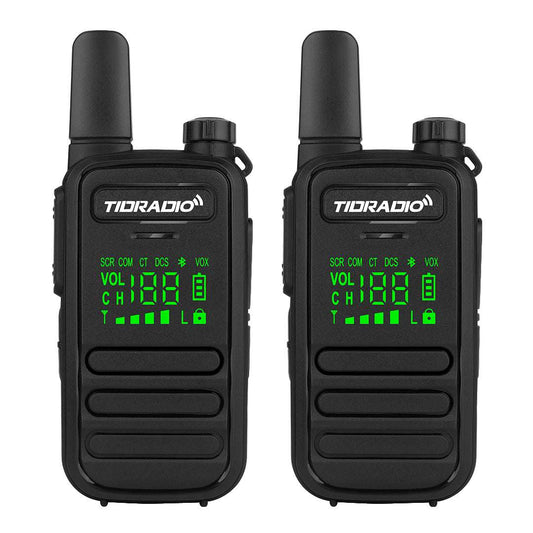
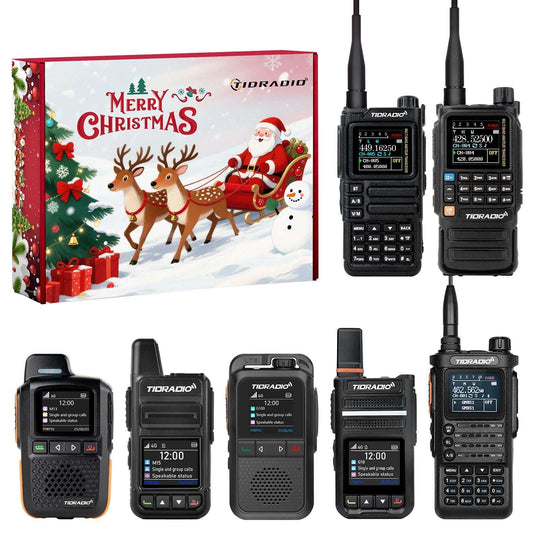
How Far Can a PoC Radio Reach? Understanding Range and Coverage
When choosing a two-way radio, one of the first questions people ask is: How far can it reach?
For traditional two-way radios, communication range is influenced by transmission power, antenna performance, terrain, and surrounding obstacles. PoC (Push-to-Talk over Cellular) radios work differently. Instead of relying on direct radio-to-radio signals, they use cellular networks to connect users over much greater distances.
So, how far can a PoC radio reach? Does a 4G LTE walkie talkie really have unlimited range? And what happens when cellular coverage is weak or unavailable?
Understanding PoC radio range and network coverage can help you choose the right communication solution for your team, workplace, or outdoor activities.
If you are new to this technology, start with our complete guide to PoC radios to learn the basics of Push-to-Talk over Cellular communication.
1. How Far Can a PoC Radio Reach?
A PoC radio can communicate over long distances as long as it has access to a compatible and available cellular network.
Unlike traditional walkie talkies, which rely on direct radio-frequency signals between devices, PoC radios transmit voice data through mobile networks. This means two users do not need to be within a fixed radio transmission distance of each other.
For example:
- A warehouse manager can communicate with a delivery driver working across the city.
- Employees at different branches can stay connected through the same communication group.
- A field team can communicate with its office while members are working in different regions.
- Traveling teams can stay in touch across long distances when compatible cellular service is available.
This is why PoC radios are often described as long-range or unlimited-range walkie talkies.
However, PoC radio range is determined by network coverage, not by an unlimited physical transmission distance. If both devices can connect to supported cellular networks and the communication service is available, they can communicate over considerable distances. If one device loses its network connection, communication may be interrupted.
In short, a PoC radio does not have the same fixed range limitation as a traditional handheld radio, but its coverage still depends on cellular network availability.
2. How Does PoC Radio Communication Work Over Long Distances?
To understand the range of a PoC walkie talkie, it helps to understand how its communication connection works.
A traditional two-way radio generally sends a radio signal directly to another radio on a compatible frequency. Its communication range depends on radio power, antenna performance, terrain, and other environmental conditions.
A PoC radio uses a different approach:
- The user presses the Push-to-Talk button and speaks.
- The radio sends voice data through a cellular data connection.
- The PoC communication service routes the voice to the intended user or group.
- Other connected radios receive the voice through their network connections.
Because communication is routed through a network rather than relying on direct radio-to-radio transmission, users can communicate across cities, regions, and other distant locations.
For a broader explanation of LTE radio technology, see our 4G LTE Radio Guide, which explains how cellular walkie talkies work and where they can be useful.
PoC Radio vs. Traditional Radio Range
| Factor | PoC Radio | Traditional Two-Way Radio |
|---|---|---|
| Communication method | Cellular data network | Direct radio-frequency communication |
| Range limitation | Cellular network coverage and service availability | Radio signal range and local conditions |
| Long-distance communication | Possible across supported network coverage areas | Depends on radio configuration and environment |
| Network dependency | Requires compatible cellular connectivity | Does not normally require a cellular network |
| Common applications | Distributed teams, logistics, and multi-location businesses | Local teams, outdoor activities, and on-site communication |
If you are also considering traditional radio communication, our GMRS Radio Guide for Beginners explains how GMRS radios work, including their channels, communication range, repeaters, and basic operating principles.
3. What Affects PoC Radio Coverage and Signal Strength?
Although PoC radios can support long-distance communication, actual performance depends on several factors. Understanding these factors is important when evaluating PoC radio coverage and network reliability.
3.1 Cellular Network Coverage
Cellular network availability is the most important factor affecting PoC radio range.
A PoC radio needs access to a supported mobile network to send and receive voice data. Coverage can vary between locations, operators, and service plans.
Before using a PoC radio, consider:
- Whether the mobile operator provides coverage in the intended area.
- Whether the radio supports the required cellular bands.
- Whether the SIM card and data service are active.
- Whether the PoC service supports communication in the destination region.
A device that works well in a city may have limited connectivity in a remote area where cellular infrastructure is less developed.
3.2 Signal Strength and Network Quality
Having cellular coverage does not always guarantee a smooth communication experience.
Weak or unstable signals can affect voice transmission, potentially causing delayed audio, interruptions, or dropped connections.
PoC radio signal strength and network quality may be affected by:
- Distance from nearby cellular base stations.
- Building materials and indoor environments.
- Underground locations and enclosed structures.
- Network congestion during busy periods.
- Temporary network interruptions.
For example, a PoC radio may work reliably outdoors but experience weaker connectivity inside a basement or a building with thick concrete walls.
3.3 Terrain and Physical Obstacles
PoC radio communication does not depend on a direct radio signal traveling from one handheld device to another over the entire distance. However, the surrounding environment can still affect cellular reception.
Mountains, valleys, dense forests, tunnels, and large buildings can make it harder for a device to receive a stable cellular signal.
This is especially important for users working in rural areas or traveling through locations with inconsistent mobile network coverage.
When evaluating a long-range PoC radio, consider the cellular coverage of the actual working environment rather than focusing only on the distance between users.
3.4 SIM Card and Network Compatibility
A PoC radio also needs a compatible network connection. Depending on the model and service arrangement, the device may use a pre-installed SIM card or require a separately activated SIM card. Supported network bands and operators can vary by model and region.
Before using a PoC radio in another country or region, check its cellular compatibility and service availability.
If you are preparing a new device, our PoC Radio SIM Card Setup Guide explains how to install a SIM card, activate your radio, and complete the initial setup.
4. Do PoC Radios Really Have Unlimited Range?
You may see PoC radios described as unlimited-range walkie talkies. But what does unlimited range actually mean?
It means that PoC communication is not restricted by the direct radio-to-radio distance that limits many traditional handheld radios.
For example, two PoC radio users may be in different cities and still communicate through cellular networks. They do not need to be within a few miles of each other or maintain a direct radio signal connection.
However, unlimited range does not mean unlimited coverage.
PoC communication still depends on:
- Available cellular network coverage.
- Supported network operators and frequency bands.
- An active SIM card and required service.
- Stable mobile data connectivity.
- Compatible devices and PoC communication services.
If a user enters an area without compatible cellular coverage, the radio may lose its connection and become unable to make PoC calls.
Therefore, the term "unlimited range" describes the long-distance capability of network-based communication, not a guarantee of coverage in every location.
5. Can PoC Radios Work Without Cellular Coverage?
This is an important question for people who use radios in remote areas, outdoor environments, or locations with unreliable mobile reception.
Standard PoC communication requires a compatible cellular data connection. If the radio cannot access a supported network, it generally cannot send or receive PoC calls through that network.
This may happen in:
- Remote mountain areas.
- Underground facilities.
- Rural locations with limited cellular infrastructure.
- Areas outside the supported network's coverage.
- Locations experiencing temporary network outages.
What About Dual-Mode PoC Radios?
Some radios combine PoC communication with traditional analog radio capability.
For example, the TIDRADIO TD-M2 Pro supports both 4G LTE PoC and analog communication. Users can use PoC mode for long-distance communication through supported cellular networks and switch to analog mode for local radio-to-radio communication when cellular coverage is unavailable.
This provides two communication options in one device:
- PoC mode: Network-based communication over supported cellular coverage.
- Analog mode: Local radio communication without relying on cellular service.
Keep in mind that analog mode has its own range limitations. The usable distance depends on factors such as frequency, antenna, transmission power, terrain, obstacles, and compatible radio settings.
If your device is already showing a network error or offline status, see our guide on how to fix PoC radio no network issues for practical troubleshooting steps.
6. How to Get More Reliable PoC Radio Coverage
While you cannot control the cellular network itself, you can take several practical steps to improve your PoC radio communication experience.
Check Cellular Coverage Before Use
Before taking your PoC radio to a new location, check the coverage of the supported network operator. Pay particular attention to remote worksites, rural roads, mountainous areas, and locations where mobile reception is known to be weak.
Confirm Network and Frequency Compatibility
Not every PoC radio supports every cellular network or frequency band. If you plan to use your device in another country, check its supported network bands and the availability of compatible service.
Test the Radio in Your Actual Working Environment
A radio that works well outdoors may perform differently inside a warehouse, factory, basement, or vehicle. Test communication in the places where your team will actually use the devices. This can help identify weak-signal areas before they affect daily operations.
Keep the SIM Card and Service Active
Make sure the SIM card is properly installed, the required data service is active, and the device can connect to its supported network. For teams that rely on PoC radios every day, checking connectivity before a shift or trip can help prevent unexpected communication interruptions.
7. How to Choose a Long-Range PoC Radio
Choosing a PoC radio is not simply about finding a device advertised with unlimited range. You should also consider network compatibility, audio quality, communication features, and whether you need a backup communication mode.
TIDRADIO TD-G19: PoC Communication with Enhanced Audio
The TIDRADIO TD-G19 PoC Radio is designed for users who want convenient network-based communication with additional audio and connectivity features.
Its key features include:
- 4G LTE PoC communication.
- Smart real-time noise reduction for clearer voice transmission.
- Bluetooth connectivity for compatible accessories.
- Network-based communication over supported coverage areas.
The TD-G19 is worth considering for teams that communicate in busy or noisy environments and want the convenience of Bluetooth accessories.
TIDRADIO TD-M2 Pro: Dual-Mode PoC and Analog Communication
The TIDRADIO TD-M2 Pro combines 4G LTE PoC communication with analog radio capability.
Its dual-mode design offers more flexibility when working in different network environments.
Key features include:
- 4G LTE PoC communication.
- Analog radio communication.
- One-button switching between communication modes.
- An additional local communication option when cellular coverage is unavailable.
The TD-M2 Pro is a practical option for users who need long-distance network communication but also want an analog mode for local communication when necessary.
Remember that the analog mode still requires compatible radios and usable local radio coverage. Check the specific product version and regional frequency requirements before use.
8. Where Are Long-Range PoC Radios Most Useful?
Because PoC radios use cellular networks, they are particularly useful when team members need to communicate across locations that are too far apart for ordinary direct radio communication.
Logistics and Delivery Teams
Delivery drivers, dispatchers, and warehouse staff may work across different routes and locations. PoC radios allow team members to communicate through supported cellular networks without needing to stay within direct radio range.
Businesses with Multiple Locations
Companies with several offices, facilities, or branches can use PoC communication to connect employees across different locations through shared communication groups.
Outdoor and Field Teams
Outdoor workers and field teams may need to coordinate activities across large areas. PoC radios can support long-distance communication when compatible cellular coverage is available.
For remote outdoor environments with limited mobile reception, consider whether a traditional radio or a dual-mode device would provide a more suitable backup option.
Frequently Asked Questions About PoC Radio Range
1. How far can a 4G LTE walkie talkie reach?
A 4G LTE walkie talkie can communicate over long distances through supported cellular networks. Its practical coverage depends on network availability, signal quality, device compatibility, and service activation rather than a fixed direct radio transmission distance.
2. Do PoC radios have unlimited range?
PoC radios are often described as unlimited-range radios because they use cellular networks instead of relying on direct radio-to-radio distance. However, they still require compatible network coverage and an active communication service.
3. Do PoC radios need cellular service?
Yes. Standard PoC communication requires access to a compatible cellular data network. Without an available network connection, PoC calls generally cannot be completed.
4. Can PoC radios work without Wi-Fi?
Many PoC radios use cellular mobile data rather than requiring a Wi-Fi connection for normal PoC communication. However, connectivity options depend on the device model and service configuration.
5. Does a PoC radio work in remote areas?
A PoC radio can work in remote areas if a compatible cellular network is available. In locations with weak or no cellular coverage, standard PoC communication may not work reliably.
6. What happens when a PoC radio loses signal?
When a PoC radio loses its cellular connection, it may be unable to send or receive PoC calls until the network connection is restored. A dual-mode radio with analog capability may provide a local communication alternative.
7. Is a PoC radio better for long-distance communication?
PoC radios are often suitable when users need to communicate across cities, regions, or multiple locations. Traditional two-way radios may be more appropriate for local communication or areas without cellular coverage.
Stay Connected with TIDRADIO
Reliable communication starts with choosing the right solution for your environment. Whether you need long-distance connectivity through cellular networks or the flexibility of both PoC and analog communication, TIDRADIO aims to make communication more accessible and dependable.
Explore the TIDRADIO PoC radio lineup and find a communication solution that fits the way your team works.
```