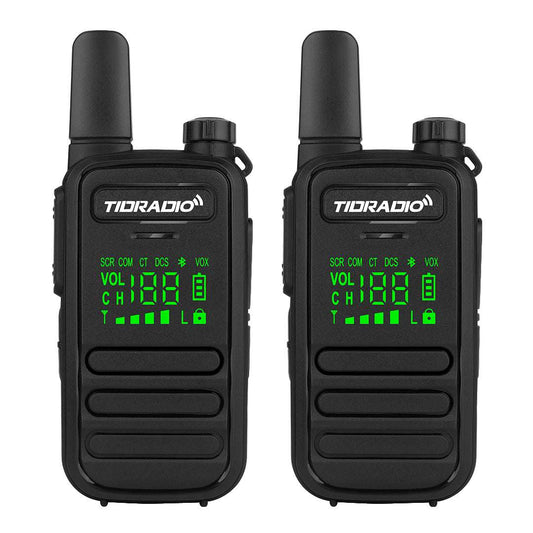
When Communication Systems Fail: Why GMRS and Ham Radios Still Matter
Modern communication depends on interconnected systems. Mobile networks, internet services, telecommunications equipment, and digital infrastructure make it easy to stay connected in everyday life. But what happens when one part of that system experiences a disruption?
A recent nationwide ground stop issued by the Federal Aviation Administration (FAA) on November 13, 2026, brought this question into focus. The disruption was linked to instability in telecommunications infrastructure used by the FAA. Although it was not a complete aircraft radio communication outage, it showed how technical problems in one part of a communication network can affect a much larger system.
For individuals, families, outdoor enthusiasts, and local teams, the incident is a useful reminder: having a backup way to communicate can make a difference.
This is where GMRS radios and amateur (Ham) radios become worth understanding. Unlike mobile phones, which depend on cellular networks, compatible two-way radios can communicate directly over radio frequencies within their operating range.
In this guide, we'll explain how GMRS and Ham radios work, compare their differences, and look at several TIDRADIO handheld radios that can support everyday and backup communication needs.
1. What Happened During the FAA Communication Disruption?
On November 13, 2026, the FAA issued a nationwide ground stop after experiencing technical problems involving its telecommunications infrastructure.
According to the FAA, the issue involved instability in legacy equipment associated with excessive data. Multiple Air Route Traffic Control Centers were affected, and flight operations were temporarily disrupted while the system was addressed.
It is important to understand what this incident did—and did not—mean:
- It was a disruption involving FAA telecommunications infrastructure.
- It did not mean that all aircraft radio communications stopped working.
- Certain radio frequencies and radar feeds remained operational.
- The FAA reported that all aircraft landed safely.
The incident illustrates an important point: even highly developed communication systems can experience technical problems. When multiple services depend on interconnected infrastructure, a disruption in one area can affect operations elsewhere.
For everyday users, the lesson is not that modern communication systems are unreliable. It is that relying on only one communication method can leave you with fewer options when something unexpected happens.
For more information, see the FAA's official explanation of the nationwide ground stop.
2. Why Have a Backup Communication Method?
Mobile phones are convenient, but they depend on cellular infrastructure. During network congestion, power outages, severe weather, or infrastructure failures, calls and mobile data may become unreliable.
Two-way radios offer another communication option. Depending on the radio type and setup, users can communicate directly with other compatible radios without needing a cellular connection.
Direct Radio-to-Radio Communication
Many handheld radios support direct communication between compatible devices on the same channel and with compatible settings. This is commonly called simplex communication.
For example, family members at a campsite can use compatible radios to stay in contact, or a local team can coordinate tasks across a worksite without depending on mobile phone service.
Communication Beyond Cellular Networks
GMRS and Ham radios operate using radio frequencies rather than cellular data networks. This means they can remain useful in areas where mobile coverage is limited, provided the radios are within communication range and have a suitable operating setup.
However, radio communication is not unlimited. Distance depends on factors such as terrain, antenna performance, obstructions, radio power, frequency, and whether a repeater is available.
To understand the basics of radio features, frequencies, and repeaters, read our guide: Walkie Talkie Features Explained: Frequencies, Repeaters, and IP Ratings.
3. GMRS vs. Ham Radio: What's the Difference?
GMRS and Ham Radio are two popular options for people interested in independent radio communication. Both can provide communication without relying on cellular networks, but they are designed for different users and operating needs.
| Feature | GMRS Radio | Ham Radio |
|---|---|---|
| License requirement in the US | GMRS license required | Amateur radio license required |
| Typical users | Families, outdoor groups, local teams | Radio hobbyists, emergency communication groups, experienced operators |
| Communication methods | Direct radio communication and repeater operation | Direct communication, repeaters, and other permitted amateur radio modes |
| Operating flexibility | More standardized channel-based operation | Broader frequency and operating options within amateur radio privileges |
| Learning curve | Generally easier for beginners | Requires more technical knowledge and operating practice |
GMRS Radio: A Practical Choice for Families and Local Groups
GMRS radios are popular for family communication, camping, road trips, off-roading, and local coordination. Their channel-based operation makes them relatively straightforward to use.
GMRS repeaters can also extend communication coverage when users have access to a compatible repeater and configure their radios correctly.
For beginners, our GMRS Radio Guide for Beginners explains channels, licensing, and basic operation.
Ham Radio: More Flexibility for Experienced Operators
Amateur radio offers a wider range of operating possibilities. Depending on the license privileges, equipment, frequency band, and operating conditions, Ham radio users can communicate locally, regionally, and over much longer distances.
Ham radio is often attractive to people who enjoy learning about radio technology, experimenting with antennas, participating in radio clubs, and developing communication skills.
It does require an appropriate amateur radio license in the United States, and operators must follow the rules for the frequencies and modes they use.
Which One Should You Choose?
If you want a relatively simple way to stay connected with family members or a local group, GMRS may be a practical starting point.
If you want more operating flexibility and are willing to learn radio regulations and technical skills, Ham radio may be a better fit.
Neither option replaces official emergency services or aviation communication systems. They are additional communication tools that can support personal preparedness and local coordination.
4. What Features Matter in a Backup Radio?
Choosing a radio involves more than looking at its maximum power rating. The right features depend on where and how you plan to use it.
1. Reliable Direct Communication
Look for a radio that supports the frequencies and operating modes appropriate for your intended use. Make sure the people you need to contact have compatible equipment and know how to use the same channels or settings.
2. Suitable Power and Antenna Performance
Higher transmit power can help in some situations, but it does not guarantee longer communication distance. Terrain, antenna efficiency, obstructions, and radio configuration all matter.
Learn more about antenna selection and compatibility in our GMRS Radio Antenna Guide.
3. Practical Features for Everyday Use
Features such as channel scanning, NOAA weather reception, programmable channels, battery capacity, and clear audio can make a handheld radio more useful in daily situations.
Some models also offer Bluetooth connectivity, spectrum analysis, or messaging functions between compatible radios. These features can improve convenience, but they do not replace the basic requirements for successful radio communication.
4. Know How to Use Your Radio Before an Emergency
A backup radio is only useful if you know how to operate it. Before relying on one, learn how to select channels, adjust volume and squelch, charge the battery, and communicate with other users.
If you encounter problems, our GMRS Radio Troubleshooting Guide covers common issues and practical solutions.
5. TIDRADIO Handheld Radios for Different Communication Needs
TIDRADIO offers handheld radios with different features and operating options. The following models are worth considering depending on your communication preferences and experience level.
TD-H3 Plus: A Compact Radio for Everyday Communication
The TIDRADIO TD-H3 Plus is a compact handheld radio designed for users who want practical communication features in a portable device.
- Up to 5W transmit power
- Bluetooth 5.1 connectivity
- USB-C charging and programming
- SMS messaging between compatible radios
- Spectrum function and NOAA weather reception
- ODmaster app support for radio programming
Its compact design and Bluetooth connectivity make it suitable for everyday use, outdoor activities, and users who want convenient radio programming and accessory options.
Learn More About the TD-H3 Plus
TD-H9: More Power and GPS/APRS Features
The TIDRADIO TD-H9 is designed for users who want additional radio functions and more advanced operating options.
- Up to 10W transmit power
- GPS and APRS functionality
- Bluetooth connectivity
- Spectrum analyzer
- SMS messaging between compatible radios
- NOAA weather reception
GPS and APRS features can be useful for amateur radio operators who want to explore location-based radio applications. Its additional functions also make it an option for users who want to develop their radio skills.
TD-H8 4th Gen: Advanced Functions for Radio Enthusiasts
The TIDRADIO TD-H8 4th Gen combines higher output power with a range of features for users who want more control over their radio setup.
- Up to 10W transmit power
- 240MHz CPU and 128MB storage
- SMS messaging between compatible radios
- Real-time spectrum function
- AM/FM reception
- NOAA weather reception
- Type-C programming and firmware upgrades
- ODmaster programming and repeater import support
With its combination of programming tools and operating features, the TD-H8 4th Gen is worth considering for users who want to explore more advanced radio functions.
Learn More About the TD-H8 4th Gen
Important: Radio versions and permitted operating frequencies vary. Always select the appropriate version for your region and intended use. A radio's ability to receive or tune to a frequency does not automatically authorize transmission on that frequency. In the United States, GMRS transmission requires a GMRS license, and amateur radio transmission requires the appropriate amateur radio license and privileges.
6. Build a Simple Backup Communication Plan
Buying a radio is only the first step. A basic communication plan helps make sure everyone knows what to do when mobile service is unavailable.
Choose Compatible Radios
Make sure everyone in your group has compatible radios and understands which channels or frequencies they are permitted to use.
Agree on a Communication Channel
Choose an appropriate channel in advance and make sure everyone knows how to select it. Avoid assuming that two radios will communicate simply because they look similar.
Set a Check-In Schedule
For families or outdoor groups, agree on regular check-in times. This can help everyone stay coordinated without needing to communicate continuously.
Keep Radios Charged and Ready
Check batteries, charging cables, antennas, and accessories before heading out. If you keep radios for emergency preparedness, test them periodically rather than waiting until you need them.
Practice Before You Need Them
Try communicating from different locations and learn how terrain and obstacles affect your range. Practice basic operation so that everyone feels comfortable using the equipment.
For more ideas about preparing communication equipment, read Emergency Communication in 2026: Why Reliable Radios Matter.
7. Frequently Asked Questions
Can GMRS radios work without cell service?
Yes. GMRS radios can communicate directly with compatible radios without cellular service, provided they are within communication range and configured correctly. A repeater may extend coverage where one is available.
Can Ham radios work without the internet?
Yes. Amateur radios communicate over radio frequencies and do not require an internet connection for direct radio-to-radio communication. Some advanced applications may use internet-connected services, but basic radio communication does not depend on them.
Are GMRS radios better than Ham radios for emergencies?
It depends on your needs and experience. GMRS radios are generally easier for families and local groups to operate. Ham radios offer more flexibility for licensed operators who have the necessary knowledge and equipment. Both can be useful as part of a broader preparedness plan.
Can a handheld radio communicate over unlimited distances?
No. Handheld radio range is affected by terrain, buildings, antenna performance, transmit power, and other conditions. Repeaters and other radio infrastructure can extend coverage, but no handheld radio guarantees communication at unlimited distances.
Do I need a license to use GMRS or Ham radios in the United States?
Yes. A GMRS license is required for GMRS transmissions in the United States. Ham radio operators must hold the appropriate amateur radio license before transmitting. Always follow applicable FCC rules and frequency privileges.
Can GMRS or Ham radios replace aircraft communication systems?
No. GMRS and amateur radios are not substitutes for aviation communication systems. They operate under different rules and are intended for different purposes. Never use a personal handheld radio to transmit on aviation frequencies unless specifically authorized under applicable regulations.
Stay Connected with More Than One Communication Option
Modern communication systems make everyday life easier, but unexpected disruptions remind us that having another way to communicate can be valuable.
GMRS and Ham radios offer different ways to stay connected without depending on cellular networks. Whether you're coordinating with family, exploring the outdoors, or building a more prepared local team, choosing the right radio and learning how to use it are important first steps.
At TIDRADIO, we believe reliable communication should be accessible and practical. We continue to develop radio products around the needs of our customers and community, helping people stay connected in everyday situations and beyond.