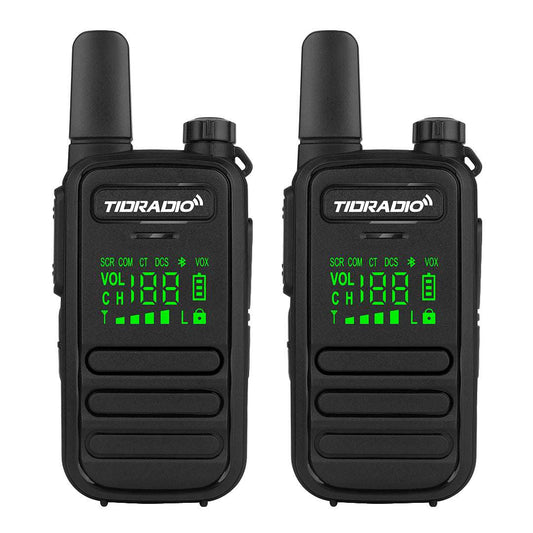
Was sind MURS-Frequenzen?
MURS (Multi-Use Radio Service) ist ein lizenzfreier UKW-Funkdienst in den Vereinigten Staaten. Er wird häufig für die Kurzstreckenkommunikation bei Outdoor-Aktivitäten, in kleinen Unternehmen, in der Landwirtschaft und in der Logistik eingesetzt.
Da MURS keine FCC-Lizenz erfordert, gilt er als eine der einfachsten Funkkommunikationsoptionen für den täglichen Gebrauch.
Was ist MURS?
MURS arbeitet im VHF-Band und ist für die Kommunikation mit geringer Leistung und kurzer bis mittlerer Reichweite konzipiert. Er wird von der FCC reguliert, erfordert aber keine Lizenz für die Benutzer.
- Keine Lizenz erforderlich
- VHF-Frequenzband
- Maximale Ausgangsleistung von 2 Watt
- Kurz- bis Mittelstreckenkommunikation
- Von der FCC regulierter Dienst
Die 5 MURS-Frequenzen
| Kanal | Frequenz |
|---|---|
| MURS 1 | 151.820 MHz |
| MURS 2 | 151.880 MHz |
| MURS 3 | 151.940 MHz |
| MURS 4 | 154.570 MHz |
| MURS 5 | 154.600 MHz |
Warum Menschen MURS nutzen
MURS ist beliebt, weil es einfach, zuverlässig und lizenzfrei ist.
- Wandern und Outdoor-Aktivitäten
- Kommunikation in der Landwirtschaft und auf ländlichem Gebiet
- Lager und Logistikbetriebe
- Koordination kleiner Teams
MURS vs. GMRS
MURS ist auf Einfachheit ausgelegt, während GMRS eine höhere Leistung und größere Reichweite bietet.
| Merkmal | MURS | GMRS |
|---|---|---|
| Lizenz | Nein | Ja |
| Leistung | 2W | Bis zu 50W |
| Reichweite | Kurz–Mittel | Mittel–Lang |
| Repeater | Nein | Ja |
Wann man MURS verwenden sollte
- Bedürfnisse für Kurzstreckenkommunikation
- Keine Lizenz erforderlich
- Abdeckung kleiner Bereiche
Wann man GMRS verwenden sollte
- Kommunikation über größere Entfernungen
- Nutzung im Fahrzeug oder in Outdoor-Gruppen
- Bedarf an Repeatern und erweiterter Abdeckung
FCC-Regeln für MURS
- Maximale Ausgangsleistung von 2W
- FCC-zertifizierte Geräte erforderlich
- Keine Lizenz erforderlich
- Keine Repeater erlaubt
Benötigen Sie mehr als MURS?
Wenn die Kommunikationsbedürfnisse über den Kurzstreckenbereich hinausgehen, steigen viele Benutzer auf GMRS-Systeme um, um eine bessere Reichweite und Flexibilität zu erzielen.
GMRS-Funkgeräte bieten höhere Leistung und erweiterte Abdeckung und eignen sich daher für Reisen im Freien, Offroad-Gruppen und Notfallkommunikation.
Einige GMRS-fähige Handfunkgeräte, wie TD-H9 oder H3 Plus, verfügen über Funktionen wie Bluetooth-Programmierung und ein robustes Outdoor-Design.
Fazit
MURS-Frequenzen bieten eine einfache, lizenzfreie Kommunikationslösung für den Kurzstreckeneinsatz in den Vereinigten Staaten.
Für Benutzer, die mehr Reichweite oder erweiterte Funktionen benötigen, ist GMRS ein natürlicher Upgrade-Pfad.
Häufig gestellte Fragen (FAQ)
Wofür werden MURS-Frequenzen verwendet?
MURS-Frequenzen werden für die Kurzstreckenkommunikation wie Wandern, Landwirtschaft, Lager und Koordination kleiner Teams verwendet.
Benötige ich eine Lizenz für MURS-Funkgeräte?
Nein. MURS ist ein lizenzfreier Funkdienst, der von der FCC reguliert wird.
Wie weit reichen MURS-Funkgeräte?
MURS funktioniert typischerweise über kurze bis mittlere Entfernungen, abhängig von Gelände, Antennen und Umgebung.
Ist MURS besser als GMRS?
MURS ist einfacher und lizenzfrei, während GMRS höhere Leistung, Repeater und größere Reichweite bietet.